

If they ask again, Cora answers again
Cora calls your loved one for a check-in or a medication reminder, one question at a time. If they lose the thread, Cora goes along with it. After each call, you can see how they're doing, including which medicines were taken, missed, or declined.
Kinse for families caring for someone with memory loss is check-in conversations and medication reminder calls by phone. A check-in is a phone conversation with Cora, up to 10 minutes. Cora asks one thing at a time, waits for the answer, and answers again when asked. On a medication reminder, Cora names each medicine and asks if they have taken it. It works with any phone, home phone or cell, old or new. Kinse is not a dementia-care program. It does not diagnose, treat, or replace in-person care. Kinse is not 911.
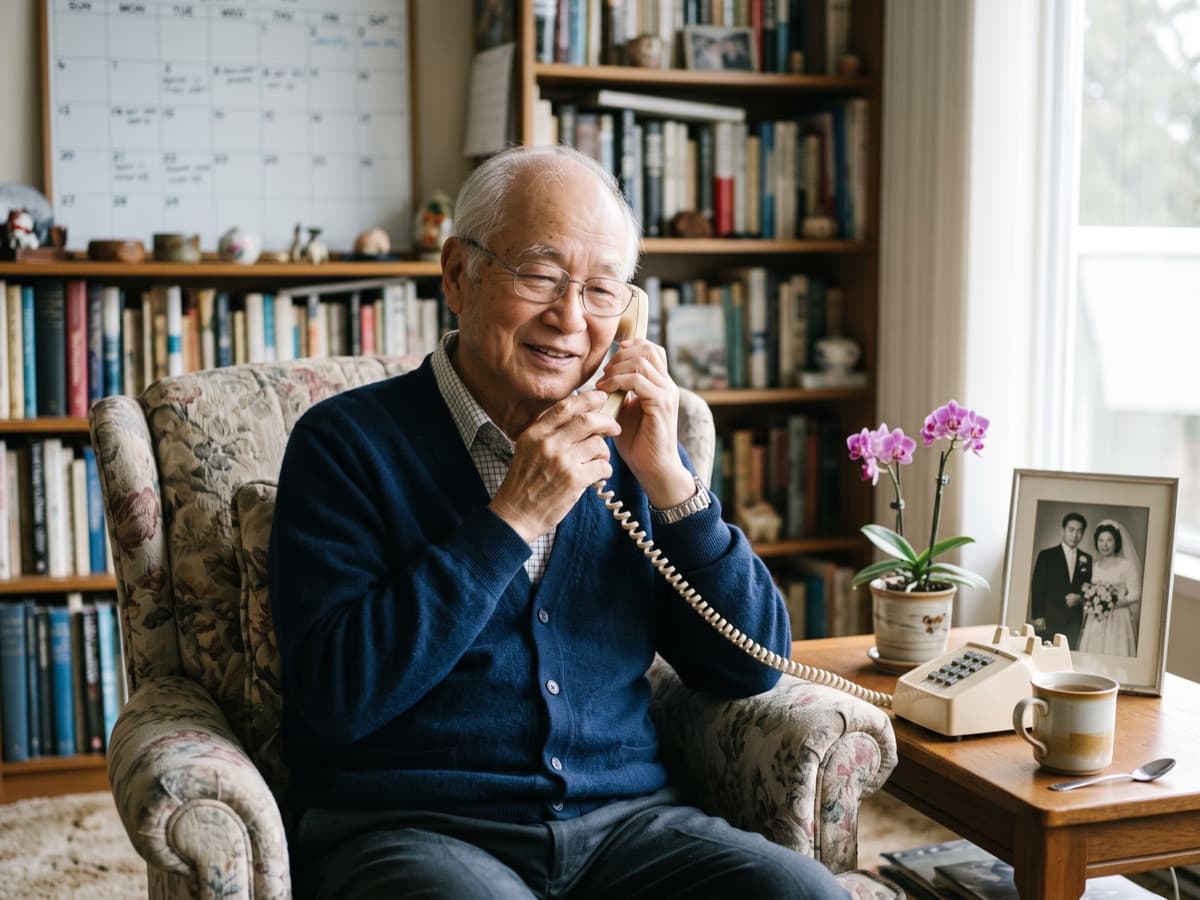
Good morning, Kenji. This is Cora. How are you this morning?
At a glance
Will they know who is calling?
Every call starts with their name and "This is Cora." After the first call, save the number in their phone as "Cora" so the name shows when it rings next time. If they ask who is calling or why, Cora answers plainly each time.
What if they get mixed up or upset?
Cora goes along with them. If they mix up a day or a name, Cora lets it go. If they tell a story again, Cora listens as if it's new. If they sound upset, Cora skips the jokes and keeps things gentle.
Did they take their pills?
Cora names each medicine and asks if they've taken it. If they're not sure, Cora asks them to check the pill organizer and waits. Your summary shows what they told Cora: taken, missed, declined, or unclear. If a medicine is missed or declined, you get an alert.
What happens on each call
You set it up
Choose the days and times, one of 6 voices, and a slower, normal, or faster pace. If an appointment is coming up, add it, and Cora mentions the time, the place, and who is taking them on the calls before it. Calls follow their local time. You can pause calls any time, like during a hospital stay.
Cora talks with them
A check-in is a phone conversation with Cora, up to 10 minutes. Cora asks one thing at a time and waits. If they go quiet, Cora says, "Take your time." If they say "What?", Cora says it again, shorter and slower.
You read the summary
You see how the call went and which medicines were taken, missed, or declined. If they don't pick up, Cora tries once more, then you get an alert. If they tell Cora to stop calling, calls pause, and you get an alert.
Plans start at $29 a month for each person Kinse calls. Each person adds 150 call minutes a month to one shared total. Every check-in and reminder call uses those minutes. See pricing
Limits
- Kinse does not diagnose, stage, or treat dementia.
- Kinse does not replace a clinician, adult day, home care, or a family visit.
- Kinse does not record calls or keep a full transcript.
- If it is urgent, call local emergency services.