
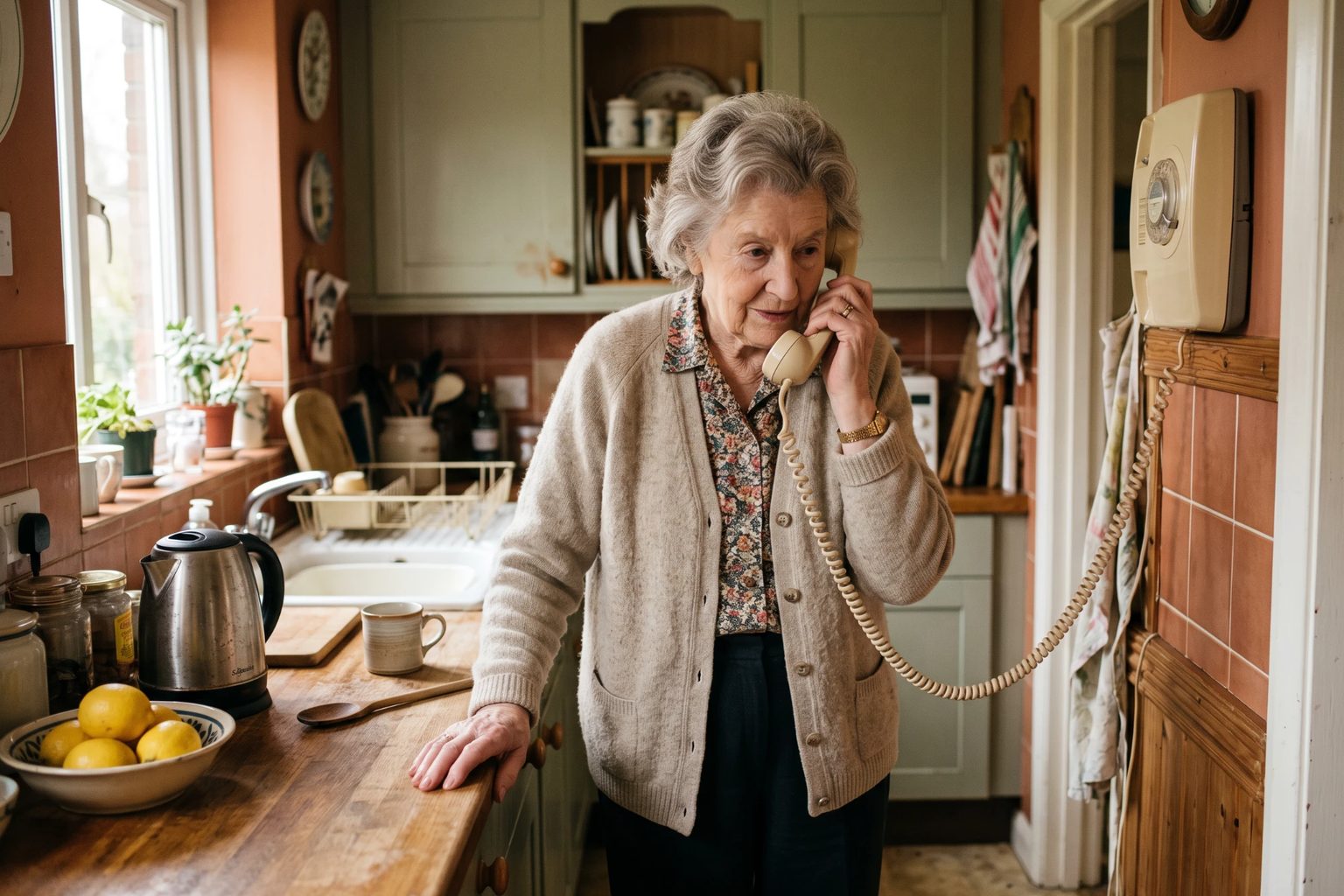
What does UN target 10.2 say?
Target 10.2 is about not leaving people out. It reads: "By 2030, empower and promote the social, economic and political inclusion of all, irrespective of age, sex, disability, race, ethnicity, origin, religion or economic or other status." For families, the words "irrespective of age" are the ones that count.
It's part of Goal 10, Reduced Inequalities. The rest of Goal 10 deals with income, tax and wage policy, financial markets, and migration. These are major issues for governments, and Kinse doesn't work on them.
How does age leave people out today?
It often happens through small barriers that add up. The pharmacy wants refills through its app. The doctor's office sends a link for forms. The bank asks for a code sent to a phone. Each step assumes you have a smartphone, good eyesight, and are comfortable with passwords.
None of this is hard for someone who grew up with it. For someone who got a first smartphone at 75, or never got one, each step is a place to get stuck. Some people stop trying and wait for a family member to visit.
Family care tools can have the same problem. A daily check-in app only works if your mother opens it every day. A smartwatch only helps if she wears it and keeps it charged.
How many older adults have a smartphone?
Most do, but not all. In a 2026 survey, the Pew Research Center found that 96% of US adults 65 and older own a cellphone, 79% own a smartphone, and 71% have broadband internet at home. That leaves about 1 in 5 with no smartphone at all.
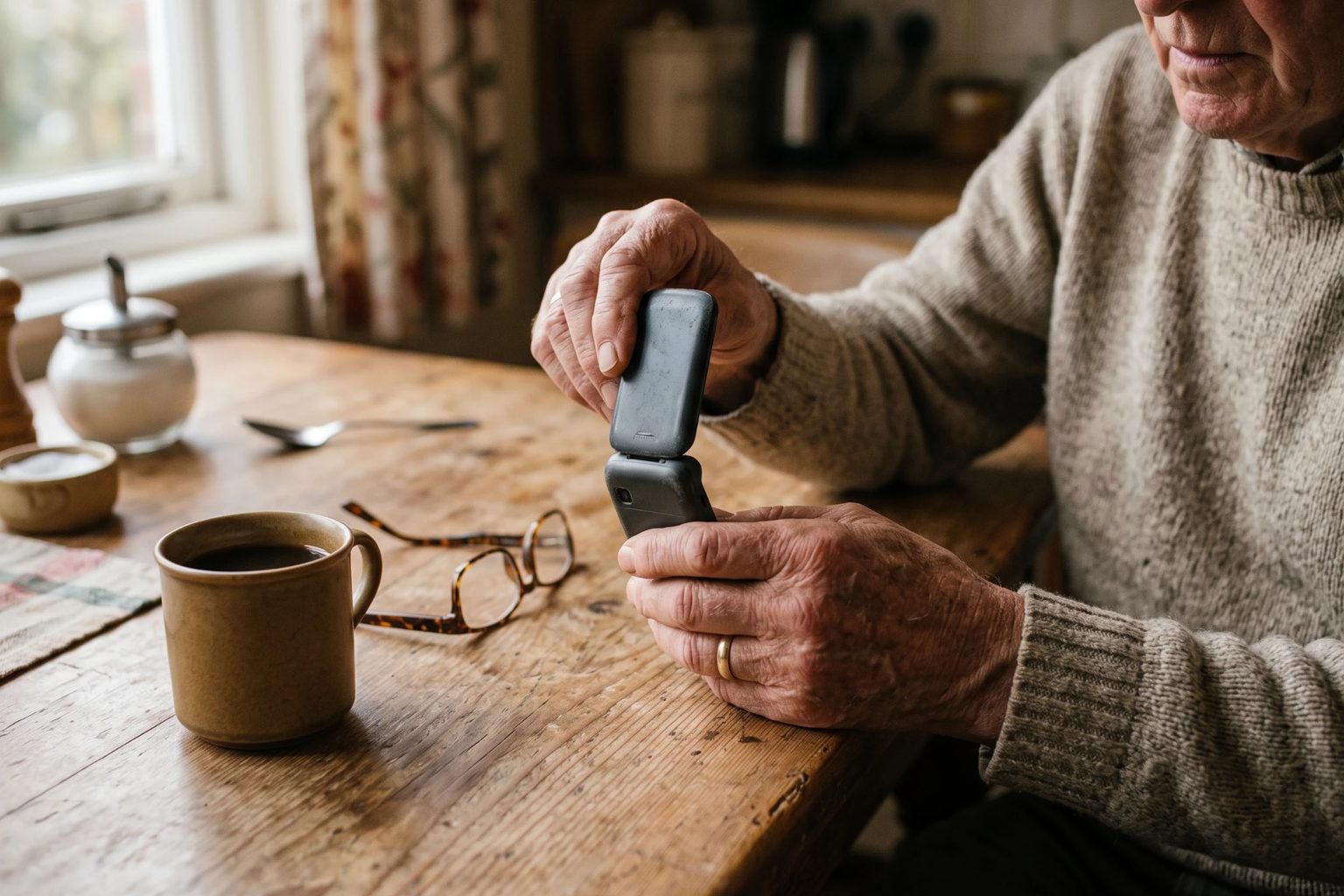
Owning a smartphone and being comfortable with it are not the same. Many people keep a smartphone just for calls and photos of the grandkids and never use the app store. The phone they always answer might still be a flip phone in their pocket or the one on the kitchen wall.
Why do phone calls still reach people?
Because nearly everyone already knows how to answer the phone. Cora calls at the times you pick, on any phone, home phone or cell, old or new. The person called doesn't download anything, make an account, or remember a password. They just pick up.
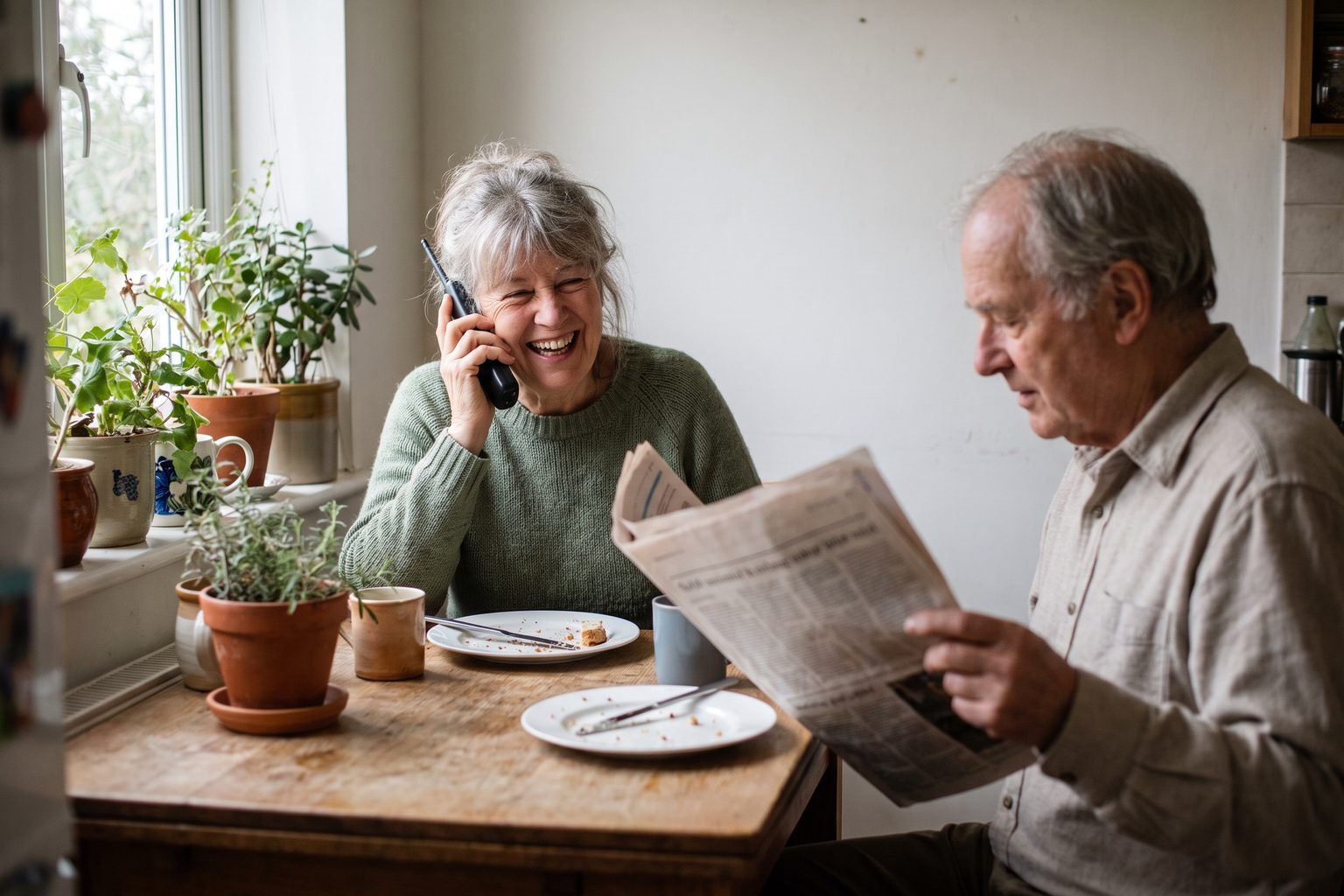
A check-in is a phone conversation with Cora, up to 10 minutes. Cora asks one thing at a time and remembers what they said last time. Medication reminders are shorter. Cora names each medicine and asks if they've taken it: "Have you taken your lisinopril yet? That's the one you take with breakfast."
Because of scam calls, many people ignore numbers they don't recognize. After the first call, save the number in their phone as "Cora" so they know who's calling next time. If they ask if Cora is a real person, Cora tells the truth. Cora never asks for money, bank details, or passwords.
What makes a call easy to follow?
Short questions, one at a time, in plain words, with time to answer. Cora asks one thing, waits, and follows what they want to talk about. If they ask Cora to repeat something, Cora repeats it more slowly.
When you set up calls, you can choose from 6 voices and a slower, normal, or faster pace. Some families choose the slower pace for someone who is hard of hearing or likes extra time to think.
The person called stays in charge of the calls. If they ever tell Cora to stop calling, the calls stop.
Who uses the Kinse app, then?
The family uses the app. You set the days and times, add medications and appointments, and read the summary after each call in the Kinse app. The person Cora calls never needs to open it. If you're setting up calls for yourself, you use the app and answer the calls on any phone.
We designed it this way on purpose. Anyone comfortable with apps uses the app, and anyone who prefers the phone gets a call. Family and friends can join the care team at no extra cost and read the same summary.
What can't a phone call fix?
A phone call doesn't close the gap between people who are online and people who aren't. That takes devices, broadband, training, and public money, which governments and communities decide on. Kinse makes one kind of family help work without an app.
It also doesn't fix anyone else's app. If the pharmacy, the bank, or the clinic only works online, someone still has to help. That may still be you, on a Sunday visit, sitting together at the kitchen table.
Kinse isn't a doctor, 911, or a medical alert. There's no camera or sensor. It's a phone call at the times you choose, and you get a summary afterward.
How we wrote this guide
This guide was written by Anthony Awoyele, a gerontologist and the founder of Kinse. The target 10.2 wording comes from the Goal 10 page of the UN Department of Economic and Social Affairs. The phone figures come from Pew Research Center fact sheets, from a survey run from January 30 to June 18, 2026.
We checked the wording and the figures on November 16 and 17, 2026. The Kinse details describe how calls work today.
The content of this post has not been approved by the United Nations and does not reflect the views of the United Nations or its officials or Member States.